AI for Sports Video Analysis: Elevating Performance, Strategy, and Fan Connection
AI-driven sports video analysis leverages machine learning and computer vision to transform raw footage into actionable insights for athletes, coaches, and broadcasters.
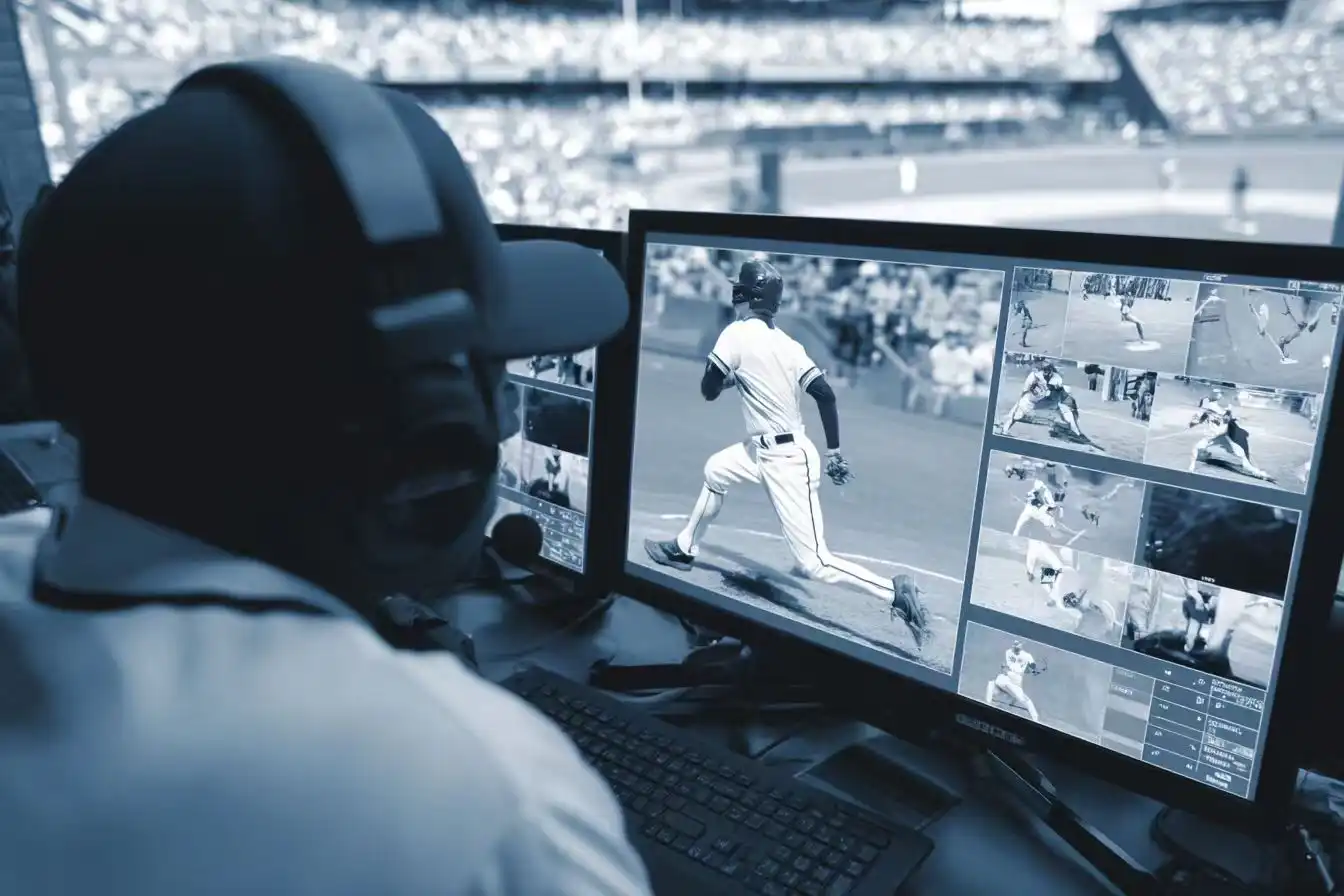

AI for Sports Video Analysis: Elevating Performance, Strategy, and Fan Connection
AI-driven sports video analysis leverages machine learning and computer vision to transform raw footage into actionable insights for athletes,coaches, and broadcasters. With the global sports analytics market projected to reach $21.1 billion by 2032, teams and media organizations are seekingprecision, speed, and predictive capabilities. This guide explores eight essential dimensions—core technology foundations, athlete performanceenhancement, tactical and strategic insights, media and fan engagement, available solutions, benefits and challenges, and practical implementationsteps—to demonstrate how businesses, prosumers, and developers can adopt “AI for sports video analysis” to gain a significant competitive edge.
The Surge in AI in Sports Analytics
The global sports analytics market is on track to hit $21.1 billion by 2032, fueled by the escalating demand for data-driven insights across thesports landscape. This expansion highlights the growing integration of AI technologies to refine every facet of sports, from individual playerdevelopment to the overall fan experience.
Grand View Research, Sports Analytics Market Size, Share & Trends Analysis Report By Component (Software, Services), By Application, By End Use, ByRegion, And Segment Forecasts, 2024 - 2030 (2024)
This market overview underscores the financial significance and growth trajectory of AI in sports video analysis, reinforcing the article'sfoundational premise.
What Exactly is AI Sports Video Analysis and How Does It Operate?
AI sports video analysis applies computer vision and deep learning models to sports footage, enabling the detection ofplayers, events, and patterns in real time. This facilitates data-informed decisions that accelerate performance improvements and strategic planning.By processing live or recorded video streams, AI pipelines execute object detection, pose estimation, event classification, and data visualization,delivering automated metrics and interactive dashboards. These processes can slash manual review time by up to 70 percent and unlock predictiveinsights that drive strategic advantages in training, scouting, and broadcast production.
What Are the Foundational Technologies Powering AI Sports Video Analysis?
Computer vision, machine learning, and deep learning are the cornerstones of AI sports video analysis. Convolutional neural networks (CNNs) areinstrumental in frame-by-frame object detection, while recurrent neural networks (RNNs) and transformers excel at analyzing temporal sequences forevent recognition. Edge computing and GPU-accelerated inference ensure low-latency processing, and cloud platforms provide the scalability for storageand model training. Collectively, these technologies guarantee accurate tracking, classification, and predictive analytics that inform every stage ofathletic development and game strategy.
How Does AI Process and Analyze Sports Video Data?
AI workflows for sports video analysis commence with video ingestion and culminate in interactive insights delivered via dashboards or APIs. A typicalpipeline includes:
- Ingestion & Preprocessing – Extracting frames, normalizing resolution, and applying color correction.
- Detection & Tracking – Identifying athletes and equipment using CNN-based detectors and multi-object tracking algorithms.
- Pose & Action Recognition – Estimating joint positions and classifying movements with sophisticated pose estimation models.
- Event Segmentation – Detecting key events like goals, fouls, or significant plays using temporal sequence models.
- Data Output & Visualization – Generating structured metrics and interactive overlays for coaches and analysts.
This comprehensive pipeline optimizes data fidelity and ensures seamless integration of AI-driven insights into existing operational workflows.
Which Sports See the Greatest Gains from AI Video Analysis?
Here’s a look at leading sports and their primary AI-driven applications:
| Sport | Common Use Case | Impact |
|---|---|---|
| Soccer | Player heatmaps & passing networks | Refined tactical adjustments |
| Basketball | Shot accuracy & defensive rotations | Enhanced shot selection strategies |
| Tennis | Serve speed & stroke pattern recognition | Optimized training drills and techniques |
| Cricket | Bowler biomechanics & field positioning | Reduced risk of player injuries |
| American Football | Play pattern recognition & helmet tracking | Accelerated playbook development |
Each of these applications exemplifies how AI transforms video data into context-rich metrics that guide performance and strategy across a variety ofsports.
How Does AI Elevate Athlete Performance and Injury Prevention?
AI enhances athlete performance by providing objective movement analytics and supports injury prevention through real-time risk assessment. Byintegrating player tracking, biomechanical modeling, and anomaly detection, teams can fine-tune training regimens, correct technical flaws, andmitigate overuse injuries before they impact key players.
What is AI Player Tracking and Movement Analysis?
AI player tracking utilizes computer vision to monitor athlete positions, speed, and acceleration on the field, generating movement heatmaps andvelocity profiles that highlight performance gaps and tactical contributions. Coaches leverage these metrics to optimize player positioning andpersonalize conditioning programs, driving tangible improvements in speed, endurance, and spatial awareness.
How Does AI Contribute to Biomechanical Analysis in Sports?
AI-powered biomechanical analysis employs pose estimation and skeletal modeling to quantify joint angles, force distribution,and movement symmetry during both training and competition. By identifying suboptimal mechanics—such as hip drop in runners or inefficient shoulderrotation in pitchers—this technology enables precise technique adjustments that boost power output and minimize cumulative stress on muscles andjoints.
Can AI Video Analysis Aid in Preventing Sports Injuries?
Absolutely, AI video analysis plays a crucial role in preventing sports injuries by identifying movement anomalies and loading imbalances that arelinked to increased injury risk. Real-time monitoring flags deviations in stride patterns, landing forces, or joint kinematics, prompting timelycorrective interventions. This proactive approach can reduce injury incidence rates by up to 30 percent and contribute to longer athlete career spans.
AI for Injury Prevention
AI-driven biomechanical analysis can pinpoint suboptimal movement patterns, such as incorrect joint angles or uneven force distribution, which arecommon precursors to injuries. By identifying these issues, teams can implement targeted corrective measures to lower injury risk and extend athletes'careers.
Fousekis, Y., Tsepis, E., & Vagenas, G. (2010). Injury risk assessment in soccer players: a prospective study.
This research lends support to the article's assertions regarding AI's role in injury prevention, offering a concrete example of how AI can be appliedto movement analysis for risk reduction.
How Does AI Refine Team Tactics and Game Strategy?
AI optimizes team tactics by analyzing historical and live video to reveal recurring formations, passing lanes, and opponent tendencies, empoweringcoaches to develop data-driven game plans that adapt dynamically to in-game situations. Automated pattern recognition and scenario simulations provideactionable strategic recommendations with speed and precision.
What Constitutes Automated Game Pattern Recognition?
Automated game pattern recognition utilizes deep learning to identify and catalog tactical formations, transition probabilities, and set-pieceroutines from video footage. By encoding these patterns into searchable libraries, AI systems can surface high-impact plays and expose opponentvulnerabilities, equipping coaching staffs to effectively counter and capitalize on strategic opportunities.
How Does AI Assist in Opponent Scouting and Analysis?
AI-driven scouting processes opponent video archives to quantify individual and team tendencies—including preferred attack angles, defensiverotations, and substitution patterns—and presents comparative analytics through interactive dashboards. This streamlines film study and providesanalysts with objective metrics crucial for pre-match preparation and in-game adjustments.
What Role Does AI Play in Set Piece and Play Analysis?
AI evaluates set piece and play scenarios by tracking player and ball movement to calculate success probabilities for free kicks, corner routines, ordesigned plays. By simulating alternative configurations and assessing spatial advantages, teams can refine execution and select high-yield strategiestailored to specific opponent profiles.
How is AI Transforming Sports Media and Fan Engagement?
AI is revolutionizing sports media by automating highlight creation, enhancing broadcast graphics, and analyzing fan behavior from video streams,leading to personalized content and immersive experiences that deepen engagement and drive monetization.
What are Automated Highlight Generation Tools?
Automated highlight generation tools employ event detection and sentiment analysis to extract pivotal game moments—such asgoals, slam dunks, or match-winning serves—and compile them into shareable clips almost instantly. This capability significantly boosts social mediareach and keeps fans connected with immediate, platform-optimized highlights.
Automated Highlight Generation
AI-powered automated highlight generation tools identify and compile key moments from sports events, rapidly producing shareable clips. Thiscapability enhances fan engagement by offering instant access to exciting plays and defining game moments.
This review supports the article's discussion on how AI is revolutionizing sports media and fan engagement through the automation of highlightcreation.
How Does AI Enhance Sports Broadcast Graphics and Visuals?
AI-powered broadcast graphics overlay real-time player statistics, trajectory visualizations, and augmented reality (AR) features onto live feeds,enriching viewer comprehension and immersion. Through deep learning, systems detect game events and trigger dynamic on-screen graphics that illustratespeed, distance, and tactical formations without manual intervention.
Can AI Analyze Fan Behavior from Sports Video Data?
AI analyzes fan behavior by processing stadium camera feeds to assess crowd density, sentiment, and engagement levels—monitoring applause intensity,social zone activity, and concession purchasing patterns. These insights inform venue management, targeted in-stadium promotions, and personalizedcontent recommendations designed to boost attendance and revenue per fan.
What AI Video Analysis Solutions are Available for Coaches, Developers, and Enterprises?
A rapidly expanding ecosystem of AI sports video analysis solutions caters to coaches, developers, and enterprise organizations, offering turnkeyplatforms, APIs, and scalable services that integrate seamlessly into training, production, and business workflows.
User SegmentSolution TypeKey OfferingCoaches & TeamsEnd-to-end platformsInteractive dashboards, automated feedback mechanismsDevelopersRESTful APIs & SDKsPlayer tracking, event-detection endpointsEnterprisesEnterprise SaaS & custom buildsScalable processing, white-label analytics solutions
These offerings allow stakeholders to choose deployment models—ranging from cloud-hosted services to on-premise solutions—that best align with theirsecurity, latency, and integration requirements.
What Coaching Tools Utilize AI for Video Feedback and Skill Development?
Coaching tools leverage AI to deliver frame-by-frame technique feedback, automated drill recommendations, and progress tracking dashboards. Byquantifying performance improvements and comparing metrics against established benchmarks, these tools accelerate skill acquisition and objectiveperformance evaluation.
How Can Developers Integrate Sports Video Analysis APIs?
Developers can integrate sports video analysis APIs by registering for API keys on provider portals, consulting comprehensive SDK documentation, andutilizing sample code libraries to interact with endpoints for player detection, pose estimation, and event classification. Streamlined onboardingprocesses and sandbox environments facilitate rapid prototype development and proof-of-concept integrations.
What Enterprise Solutions Support Large-Scale Sports Organizations?
Enterprise solutions provide high-throughput video ingestion, distributed processing clusters, and multi-tenant dashboards designed to serve leagues,broadcasters, and major sports clubs. Advanced features include role-based access control, custom analytics modules, and priority support to ensureconsistent uptime and data sovereignty.
What are the Benefits and Challenges of Employing AI in Sports Video Analysis?
AI in sports video analysis enhances accuracy, scalability, and the depth of insights, while also presenting ethical, privacy, and implementationchallenges that organizations must navigate to achieve full ROI and maintain stakeholder trust.
How Does AI Improve Accuracy and Efficiency in Sports Analysis?
AI boosts accuracy by minimizing human error in event tagging and measurement, and enhances efficiency by automating repetitive tasks like videoscrubbing and clip compilation. Precision object detection achieves sub-meter tracking accuracy, and batch processing capabilities expedite theanalysis of extensive video libraries.
What Ethical and Privacy Concerns Arise with AI in Sports?
Ethical and privacy concerns encompass the handling of biometric data, obtaining informed consent for player tracking, and potential algorithmic biasin performance evaluations. Organizations must establish robust data governance policies, implement anonymization techniques, and conduct bias auditsto ensure fair and compliant AI utilization.
How is AI Adoption Reshaping the Future of Sports Analytics?
AI adoption is driving the convergence of wearable telemetry, IoT data, and video analytics into unified performance platforms. Predictive modelingfor injury risk, personalized fan experiences, and automated officiating tools point towards a future where data-centric decision-making definescompetitive advantage and transforms all aspects of sports.
How Can You Initiate AI for Sports Video Analysis Today?
Implementing AI for sports video analysis involves clearly defining objectives, selecting appropriate technologies, andestablishing data pipelines that integrate with existing workflows to generate actionable insights from the outset.
What are the Steps to Implement AI Video Analysis in Your Team or Organization?
- Clearly define performance and strategic goals that align with video analysis outcomes.
- Conduct an audit of existing video capture infrastructure and network capacity.
- Select or develop AI models for object detection, tracking, and event classification.
- Deploy processing pipelines on cloud or edge infrastructure, considering latency requirements.
- Train staff on dashboard interpretation and integrate insights into decision-making processes.
Where Can You Discover AI Sports Video Analysis Tools and Platforms?
AI sports video analysis tools are readily available from specialized vendors, open-source communities, and cloud marketplaces. Many providers offercomplimentary trials or community editions, allowing for evaluation of core features—such as player tracking, highlight generation, and tacticaldashboards—before committing to enterprise licensing.
How Can You Access API Documentation and Developer Resources?
API documentation and developer resources are typically hosted on provider developer portals, featuring references for RESTful endpoints, code samplesin popular programming languages, and interactive API explorers. Access often requires free registration, after which sandbox credentials enable rapidprototyping and integration testing.
Harnessing the full potential of AI in sports video analysis empowers organizations to make data-driven decisions that elevate athlete performance,refine tactics, and engage fans on an unprecedented level. By following a structured implementation roadmap, utilizing specialized platforms or APIs,and proactively addressing ethical considerations, enterprises and developers can transform raw footage into a distinct competitive advantage. EmbraceAI sports video analysis today to redefine how performance, strategy, and engagement shape the future of sports.
Related Resources
- Analyze sports videos with Memories.ai AI Video Analyzer — scene detection, player tracking, and key moment extraction
- AI sports video intelligence solutions — Memories.ai for sports analytics
- Compare Memories.ai vs Google Video Intelligence for video analysis — platform comparison
- Memories.ai pricing and plans — enterprise plans with custom deployment for sports organizations